
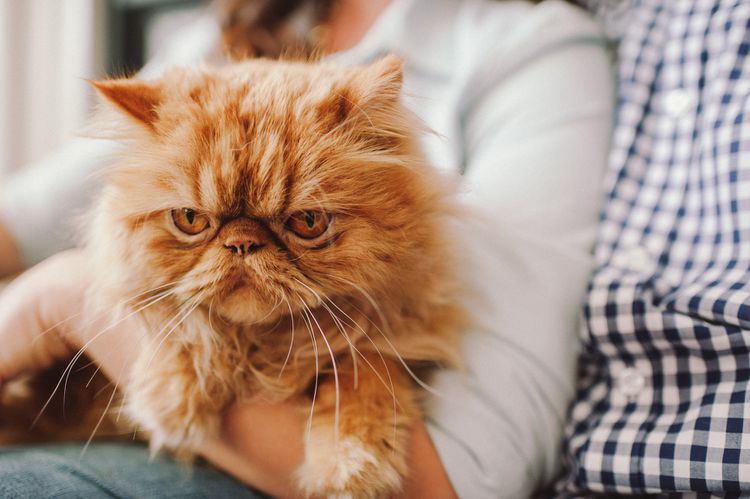
Most owners recognize their special cats have a distinct cat personality. But are there behavioral differences between a black cat and an orange kitty? Some surveys say cat color matters, though most researchers say otherwise. On the other hand, cat breeds (Siamese, Russian Blue, and so forth) really do have personality types.
Still, anecdotal evidence from cat owners often highlights perceived personality traits linked to coat color. This discrepancy between owner beliefs and scientific research sparks interesting discussions within the feline-loving community.
Does Cat Color Influence Cat Personality?
Most household cats are domestic shorthairs. These cats come in a wide range of colors and patterns but share a common ancestry. In other words, a single litter can easily include a black, orange, and calico kitten. These siblings are likely to have a good deal in common, fur color notwithstanding.
But that doesn't stop people from believing that cat color influences personality. For example, one survey indicates black cats more easily tolerate crowding and indoor living than tabby-pattern kitties. Owners of calico kitties say that they have a "different" cattitude compared to other color kitties. Red fur is an early mutation, so this gene could be associated more closely with the personality of the earliest domesticated cats. A study of 84 British Shorthair kittens revealed that red, cream, or tortoiseshell kittens (with the "red" gene) threw tantrums and struggled to escape for longer periods when handled by unfamiliar people, compared to kittens of other colors.
Impact of Perception on Cats' Lives
While it's unlikely that color alone has much of an impact on a cat's personality, peoples' beliefs have a strong impact on how they choose and care for their cats.
A study described by the University of California, Berkeley discovered that: "Overall, orange cats and bi-colored cats were characterized as friendly, while black cats, white cats, and tri-colored cats were regarded as more antisocial. White cats were considered to be more shy, lazy, and calm, while tortoiseshell cats were more likely to be depicted as both more intolerant and more trainable. Black cats were typified as having less extreme character traits, which might contribute to their mysterious reputation."
Whether these characteristics have much truth to them or not remains unclear, though, according to the Smithsonian Institution, "A 2002 study in the Journal of Applied Animal Welfare Science, for example, found that black cats and brown cats were the least likely to be adopted. Dark cats were also more likely to be euthanized. And despite there being little genetic evidence that the genes that guide the coloring and patterning on a cat’s coat also influence its behavior, the study found that people frequently believed that tortoiseshells had too much attitude (or 'tortitude'), which may explain why they don’t get adopted quickly or get returned to the shelter."
Impact of Cat Breeds on Personality
Unlike color, cat breeds really do make a difference in a pet's personality. For example, Ragdoll cats are almost universally placid, as are Ragamuffins and Persians. The Egyptian Mau, on the other hand, is generally active and athletic. As pedigreed cats are much more expensive than "mutts" available in shelters, it's important to research your prospective pet before making a purchase.
Picking Personality With Color
Breeding won't be an issue with spayed and neutered pet cats. But if coat color can help predict temperament and tolerance, that could be an important consideration when choosing a new cat companion. Tolerance of crowding and friendliness toward other kitties is particularly important when adding to your existing cat family.