
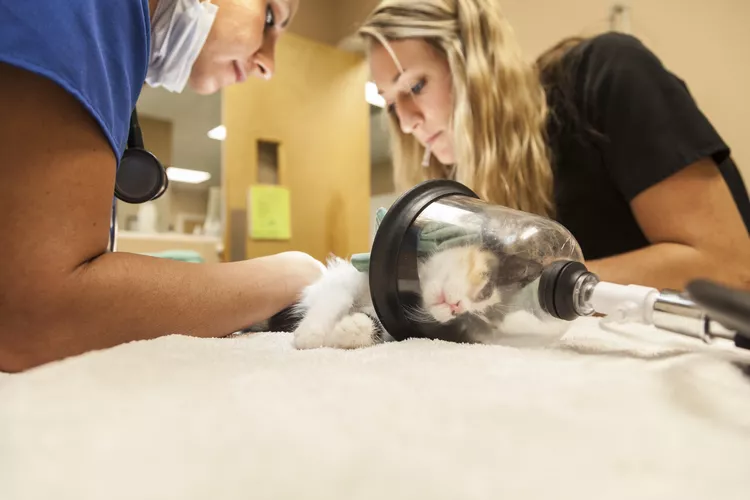
Many pet owner's are fearful of anesthesia. Anesthesia, defined as a "loss of feeling or sensation," is commonly used in veterinary practices, and provides an essential tool for surgical or other painful procedures that are recommended for your cat's health. Anesthesia is expected to be used when your cat is spayed or neutered, in dental cleanings and more. Here is some information that helps give you a better understanding of some of the commonly used types of anesthetics we use for pets.
Sedation Before Anesthesia
Cats are generally given sedatives or tranquilizers before anesthesia. These drugs will sedate and calm your cat so it can be relaxed and given a mask or tracheal tube required for inhalant anesthesia. Your vet will use various combinations to help reduce the risks of anesthesia while supporting your pet's pain and sedation level needed for procedures that support your pet's health. Sedating drugs are administered a variety of ways such as subcutaneously (under skin), intramuscular (in muscle) or intravenously.
Injectable Anesthetics
There are many different types of injectable anesthetic agents and we will cover a few common ones. Each of these agents have pros and cons. Talk to your veterinarian about the risks of using certain anesthetics for your cat's procedure. The doctor can ease your mind about the type of anesthetic that'll be used and why.
Opioids: Opioids are one of the most commonly used premedications in cats and dogs. They provide both pain control and have relatively minimal effects on the cardiovascular system making them drugs of choice for many pet's with respiratory or cardiac disease. Different opioids last varying lengths of time in the body. Many opioids can be combined with other medications fairly easily making them an ideal choice for premedication's in many cats.
Benzodiazepines: This class of drugs is considered one of the safer category of drugs for veterinary patient's and is commonly a drug of choice for geriatrics. It has become increasing popular in veterinary medicine. This class of drugs can cause an excitatory effect in some patients, occasionally. It also has anti-seizure effects and examples of drugs in this class are midazolam and diazepam.
Ketamine: Ketamine is a dissociative anesthetic widely used as both a pre-anesthetic drug and in combination with other drugs. Ketamine is used in many situations and is a key component for anesthesia in cats that get fractious at the vet helping assure they get the care they need.
Propofol: Propofol is a non-barbiturate sedative that causes relaxation and sleepiness. . Propofol is one of the most common induction agents used in veterinary medicine. It is quick-acting, offers a rapid recovery period, and rarely causes drug reactions or long term side effects.
Inhalant Anesthetics
Isofluorane is an inhalant gas that is commonly used in veterinary medicine. Most veterinary procedures use isoflurane or sevoflurane gas during anesthesia to help maintain patients at an appropriate level of sedation and analgesia.
There are pros and cons to each of the injectable sedatives mentioned above. It's always a potential risk when using anesthesia for any pet no matter the age or condition. Still, anesthesia is an important part to allowing procedures that support the health, comfort and longevity of our pets. Ask your veterinarian to do a pre-anesthetic blood screening. This precaution will help your veterinarian determine the best anesthetic or combination of anesthetics for your cat.